Mice in Albuquerque Homes: Signs, Risks & Solutions
Seeing signs of mice in your Albuquerque home? Learn how rodents get inside, health risks, and when to call a professional.
6/5/20264 min read
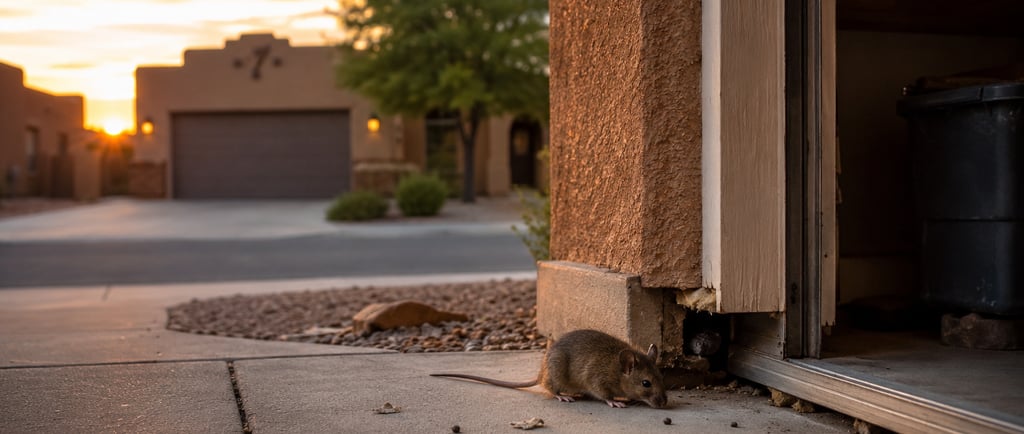
Why Am I Seeing More Mice in My Albuquerque Home This Summer?
If you've started hearing scratching noises in the walls, finding small droppings in the pantry, or spotting a mouse dart across the floor at night, you're not alone.
Many homeowners throughout Albuquerque, Rio Rancho, and surrounding areas notice increased rodent activity during the warmer months. While mice are often associated with winter, summer can create the perfect conditions for rodents to move into homes in search of food, water, and shelter.
The good news is that early action can prevent a small problem from becoming a major infestation.
Why Mice Become More Active Around Albuquerque Homes
Albuquerque's climate creates unique challenges for homeowners. As temperatures rise, outdoor food and water sources often become scarce.
Rodents begin exploring neighborhoods looking for:
Reliable water sources
Pet food
Bird feeders
Garbage containers
Cool, protected nesting areas
Your home provides everything a mouse needs to survive.
Homes in areas such as Northeast Heights, the Westside, South Valley, and Rio Rancho are all vulnerable to rodent activity, especially when landscaping, garages, or storage areas provide easy access.
A single female mouse can produce multiple litters each year, meaning a small problem can grow surprisingly fast.
7 Signs You May Have Mice Living In Your Home
1. Scratching Sounds in the Walls
Many homeowners first notice mice by hearing scratching, scurrying, or movement behind walls and ceilings.
These sounds are often most noticeable at night when rodents become active.
2. Mouse Droppings
Small dark droppings near:
Pantries
Cabinets
Garages
Laundry rooms
Utility closets
are one of the most obvious signs of activity.
Fresh droppings indicate an active infestation.
3. Chewed Food Packaging
Mice constantly gnaw to keep their teeth from overgrowing.
You may notice damage to:
Cereal boxes
Pet food bags
Bread packaging
Stored pantry items
4. Unusual Pet Behavior
Dogs and cats often detect rodents before people do.
If your pet suddenly becomes obsessed with a particular wall, cabinet, or appliance area, it may be worth investigating.
5. Strange Odors
As infestations grow, homeowners often notice a strong musky smell.
The odor typically becomes stronger in enclosed areas such as attics, garages, and crawl spaces.
6. Nesting Materials
Mice build nests using:
Paper
Insulation
Fabric
Cardboard
Dryer lint
Finding shredded materials in hidden areas can indicate nesting activity.
7. Actual Sightings
Seeing a mouse during daylight hours often suggests a larger infestation.
Healthy mice typically avoid people and remain active at night.
How Mice Get Into Homes In Albuquerque
One of the most surprising things homeowners learn is how small an opening a mouse can squeeze through.
Common entry points include:
Garage Door Gaps
Even small gaps beneath garage doors can provide access.
Utility Penetrations
Openings around:
Plumbing
Electrical lines
Gas pipes
HVAC systems
often create hidden entry routes.
Roof Access
Tree branches and rooflines can provide easy access to attics.
Foundation Cracks
Small cracks can allow rodents to enter unnoticed.
Exterior Vent Openings
Damaged screens and vents frequently become access points.
Many homeowners are shocked to discover that the infestation isn't starting inside the house—it's starting outside around the structure.
Why DIY Mouse Control Often Fails
Most homeowners try traps first.
While traps can help catch individual mice, they rarely solve the root problem.
Common reasons DIY efforts fail include:
Hidden Nests
You may catch a few mice while missing the breeding population entirely.
Unsealed Entry Points
New mice continue entering even after existing rodents are removed.
Rapid Reproduction
Mice reproduce quickly, making it difficult for traps alone to keep up.
Incomplete Coverage
Most infestations spread through attics, wall voids, garages, and storage spaces that aren't easily accessible.
Without identifying all activity areas, infestations often return.
Health Risks Associated With Rodents
Rodents are more than a nuisance.
They can create serious health and safety concerns for families.
Potential risks include:
Food Contamination
Rodents frequently contaminate food storage areas with urine and droppings.
Allergens
Rodent waste can trigger allergies and respiratory irritation.
Property Damage
Mice commonly chew:
Drywall
Wood
Insulation
Electrical wiring
Damaged wiring can increase fire risks.
Disease Concerns
Rodents are known carriers of bacteria and pathogens that should not be present in living spaces.
Need Help Right Away?
If you've noticed droppings, scratching noises, or signs of nesting activity, a professional inspection can identify the source before the problem grows worse.
Early intervention is typically less expensive and more effective than waiting until the infestation spreads throughout the home.
When Should You Call A Professional Rodent Removal Company?
You should consider professional help when:
You continue seeing mice after setting traps
You hear activity inside walls or ceilings
Droppings keep appearing
You suspect multiple nesting areas
You cannot locate entry points
The infestation has been ongoing for weeks
Professional inspections often reveal hidden activity that homeowners never see.
How L&M Pest Control Solves Rodent Problems
At L&M Pest Control, rodent control begins with identifying how and why rodents are entering the property.
Our process includes:
Comprehensive Inspection
We locate active rodent activity, nesting areas, and entry points.
Removal Strategies
Targeted treatment methods help eliminate active infestations.
Exclusion Recommendations
Identifying and sealing access points helps prevent future issues.
Ongoing Prevention
We help homeowners reduce conditions that attract rodents in the first place.
Whether you're located in Albuquerque, Rio Rancho, the Northeast Heights, South Valley, or surrounding communities, professional rodent control can provide long-term peace of mind.
Frequently Asked Questions
Are mice common in Albuquerque homes?
Yes. Rodent activity is common throughout Albuquerque and surrounding areas due to the desert climate and abundant food and shelter opportunities.
Can mice live inside walls?
Absolutely. Wall voids provide protection, warmth, and easy travel routes.
How many mice indicate an infestation?
Even one mouse can indicate a larger hidden population.
Do mice leave on their own?
Rarely. If food and shelter remain available, they often stay and reproduce.
Can mice damage electrical wiring?
Yes. Rodents frequently chew wiring, which can create safety hazards.
How fast do mice reproduce?
A single female mouse can produce multiple litters annually, causing infestations to grow rapidly.
Schedule a Rodent Inspection Today
Rodent problems rarely improve on their own.
If you're hearing scratching sounds, finding droppings, or noticing signs of rodent activity, L&M Pest Control can help identify the source and recommend an effective solution.
A professional inspection can help protect your home, your family, and your peace of mind before a minor problem becomes a major infestation.
Contact L&M Pest Control today to schedule your inspection.